To many, trauma is defined by the initial impact—the overwhelming wave of emotion, the sharp pain, or the primal instinct to fight, flight, or freeze. But as a therapist, I have seen that the true source of our long-term suffering is often not the event itself, but the narrative we weave around it.
When our psyche becomes trapped in a single, static version of a story, time seems to stand still. We find ourselves hitting "replay" on our darkest moments, stuck in a loop where the past feels more real than the present. One of the primary goals of therapy is to help this "frozen" story flow again, unlocking the life that has been held captive by a narrative that no longer serves us.
The Mirror of Interruption
Trauma is more than a wound; it is a profound interruption. It forces a pause that compels us to examine the systems we have been in: family, social, or internal—that may have been failing long before the crisis hit. It acts as a mirror, exposing the unspoken rules, inherited patterns, and hidden realities we might have intentionally or unintentionally avoided.
However, we cannot simply "rewrite" this story through sheer willpower. To turn the page without acknowledging the weight of the previous chapter is not healing, but avoidance.
For many of us, "just moving on" can feel like a deep self-betrayal. It can feel as though we are copying the very patterns our caregivers used—dismissing our pain or demanding we be "fine" before we are ready.
When we rush the process, we are essentially telling our hurting inner self: "Your pain is an inconvenience, just keep going." True rewriting isn't about obedience to a new story; it’s about a collaborative partnership with your own history.
The Art of Restoration
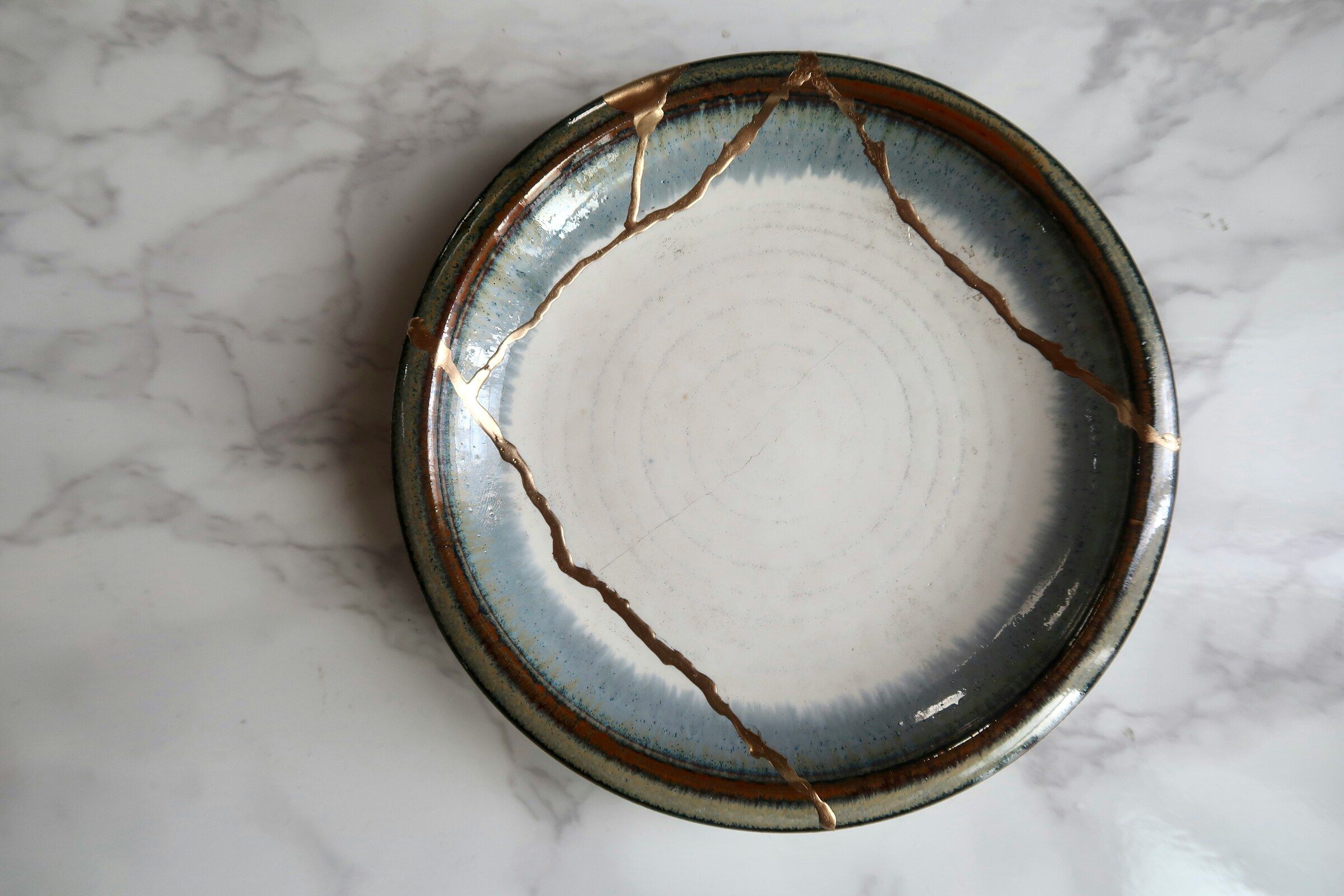
I often think of trauma work through the lens of Kintsugi - the Japanese art of repairing broken pottery with gold. In Kintsugi, the breakage is not hidden; it is illuminated.
It is vital to remember that this process is not linear, and everyone’s path to wholeness looks different. There is no "right" way to begin gathering the pieces. Some may need to connect with the body first, listening to the physical echoes of the past. Others may need the clarity of insights and a deeper understanding of the beliefs they’ve carried.
For many, trauma feels wordless and amorphous—like a heavy fog or a nameless pressure. In these moments, we need a tool, a metaphor, or a creative outlet not just to describe the pain, but to give the pain a shape. By giving it a form, we move from being consumed by the pain to finally beholding it, making sense of its edges so we can begin the work of repair.
The Four Stages of Repair
Whatever your unique entry point, the restoration would involve components like these.
- Seeing the Shards: We begin by simply seeing the pain we have experienced and acknowledging the reality of the break.
- The Space to Feel: When trauma happens, it’s as if a bowl has shattered into a thousand chaotic fragments; we often can’t tell what is what. In this stage, we pick up each piece with care to make sense of it. This part of the process requires patience, as we may occasionally "cut our hands" or feel a surge of fear in our hearts as we unpack the trauma. It is the brave work of looking at each fragment and saying, "This, too, is part of what happened."
- Putting it Back Together: Once we have gathered the pieces, we begin the work of mapping. We look at how they fit together to understand what truly happened. This is where we recognize the "cracks"—whether they are family dynamics, rigid beliefs, emotional patterns, or systemic failures. By mapping the damage, we find the root cause and identify exactly where the repair needs to begin.
- The Golden Integration: Finally, we begin the process of adding the "gold." This represents the new insights we have learned and the new meanings we assign to our pain. The gold can be the courage we discovered, the self-forgiveness we cultivated, and the self-compassion we grew. As we fill the cracks, we recognize the strength we gained through the trauma, turning the broken vessel into something completely different and beautiful.
The Choice Point
Ultimately, we all reach a choice point. We can allow ourselves to be defined by our trauma, our insecurities, or our flaws, continuing to write the same old story and grieving over the broken pieces for the rest of our lives.
Or, we can choose a different path.
We can feel the pain, cry the tears, and take a pause for however long we need. Then, at our own pace, we can practice being the creator of our own life. This path is rarely easy or comfortable, but the truth is that we will experience suffering either way. The question is whether we want to suffer within the same old loop, or suffer through the growing pains of transformation.
Our trauma, our imperfections, and our scars are part of us, but they do not have the final say. We have the free will to choose how we view them. It is our responsibility—and our privilege—to find our own way of "Kintsugi," turning our brokenness into a story that is uniquely, bravely ours.